

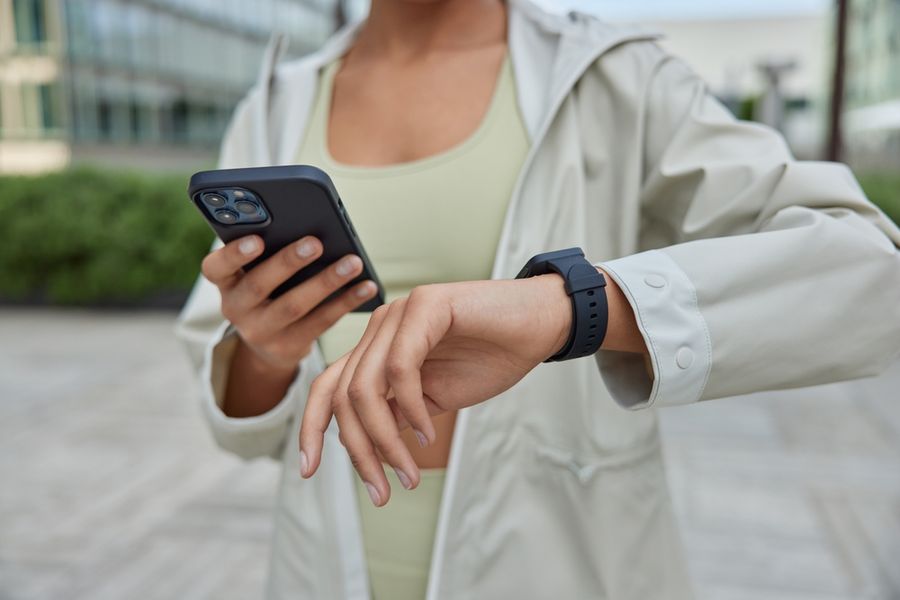
Millions of people now check their heart rate, sleep score, or step count before their morning coffee. Wearables and apps have turned health monitoring into a daily habit, promising sharper self-awareness and better outcomes. Yet the same data that helps someone catch an irregular heartbeat or stick to a fitness goal can also fuel anxiety, get shared with advertisers, or mislead when a sensor is wrong. Weighing the benefits against the trade-offs is worth doing before strapping on the next device.
Pro: Early Detection and Self-Awareness
The most compelling argument for personal health tracking is that it can surface problems before they become emergencies. Smartwatches that monitor heart rhythm have flagged atrial fibrillation in wearers who had no symptoms, prompting them to seek care earlier than they otherwise would have.
A U.S. Government Accountability Office review of wearable technologies found that continuous monitoring can genuinely support clinical decision-making, even as it cautioned that the technology's role is still evolving. Beyond acute events, simply seeing patterns over time, such as a slow decline in sleep quality or a creeping resting heart rate, gives people information they would never have noticed otherwise. That self-awareness is often the first step toward a conversation with a doctor rather than a diagnosis in itself.
Pro: Turning Data Into Motivation
Numbers have a way of changing behavior, and that is a large part of why fitness trackers and health apps have become so popular. Seeing a step count fall short, or a streak about to break, nudges people toward small daily choices they might otherwise skip. Research backs this up to a degree: systematic reviews of mobile health apps have found real, if modest, effects on physical activity, diet, and medication adherence, particularly when the app includes goal-setting, reminders, and feedback loops rather than raw numbers alone, according to a systematic review published in JMIR mHealth and uHealth and a related review in npj Digital Medicine. The effect isn't universal or permanent for everyone, but for people who respond well to feedback and accountability, tracking can be a genuinely useful behavior-change tool.
Pro: Supporting Chronic Disease Management
For people managing diabetes, hypertension, or heart disease, tracking devices can do more than motivate; they can inform actual treatment decisions. Continuous glucose monitors, connected blood pressure cuffs, and heart rate variability trackers let patients and clinicians see trends between office visits instead of relying on a single snapshot taken during an appointment.
A systematic review in PMC on mobile health apps and medication adherence found measurable improvements in chronic disease populations, and hospitals are increasingly building consumer wearable data directly into electronic health records. Used well, this turns a fitness gadget into an extension of the care team.
Con: The Privacy Trade-Off
The benefits of tracking come with a catch: most of this data is not protected the way people assume it is. HIPAA governs health information held by doctors, hospitals, and insurers, but it generally does not cover data collected by a fitness app or wearable purchased directly by a consumer. That data can often be sold or shared with advertisers, data brokers, or employers under terms buried in a privacy policy most users never read. Biometric and location data from wearables creates a uniquely sensitive and re-identifiable profile of a person, one that regulators are only beginning to catch up to.
Con: Accuracy Gaps and False Reassurance
Consumer health devices are convenient, but they are not medical-grade instruments, and the gap between the two matters. The National Center for Health Research has documented cases where trackers misread heart rate, calorie burn, or sleep stages, sometimes significantly. That inaccuracy cuts both ways: a false alarm can send someone to the emergency room unnecessarily, while a missed reading can offer false reassurance when something is actually wrong.
Con: When Tracking Fuels Anxiety
For some users, the constant stream of numbers becomes a source of stress rather than reassurance. Clinicians describe a pattern where checking a smartwatch's stress score or sleep score repeatedly throughout the day heightens the very anxiety it was meant to monitor, sometimes called "health tracking anxiety" or a wearable-driven form of cyberchondria.
People prone to health anxiety can spiral over a single low sleep score or elevated heart rate reading that may mean nothing at all. For others, the pressure to hit a perfect score every day can turn a wellness tool into a source of daily dread. For this group, less data, not more, may be the healthier choice.
Finding the Right Balance
None of this means health tracking is a bad idea; it means it works best with some intention behind it. Choosing a device for a specific purpose, such as catching irregular heart rhythms or managing a diagnosed condition, tends to produce better outcomes than passively collecting every metric available. Reading the privacy policy, limiting data sharing where possible, and treating any single reading as one data point rather than a verdict all go a long way. Tracking personal health data can be a powerful tool for awareness and motivation, but like any tool, its value depends on how carefully it gets used.