

Canada is home to nearly 50 national parks and reserves spanning fjords, prairies, temperate rainforests, and Arctic tundra, and 2026 brings fresh reasons to visit. Banff is coming off record-breaking crowds, Jasper's trails are reopening two years after devastating wildfires, and Parks Canada continues offering free entry to visitors 17 and under. From coastal surf breaks to remote canyons reachable only by float plane, there are standout parks worth prioritizing this year.
Banff National Park, Alberta
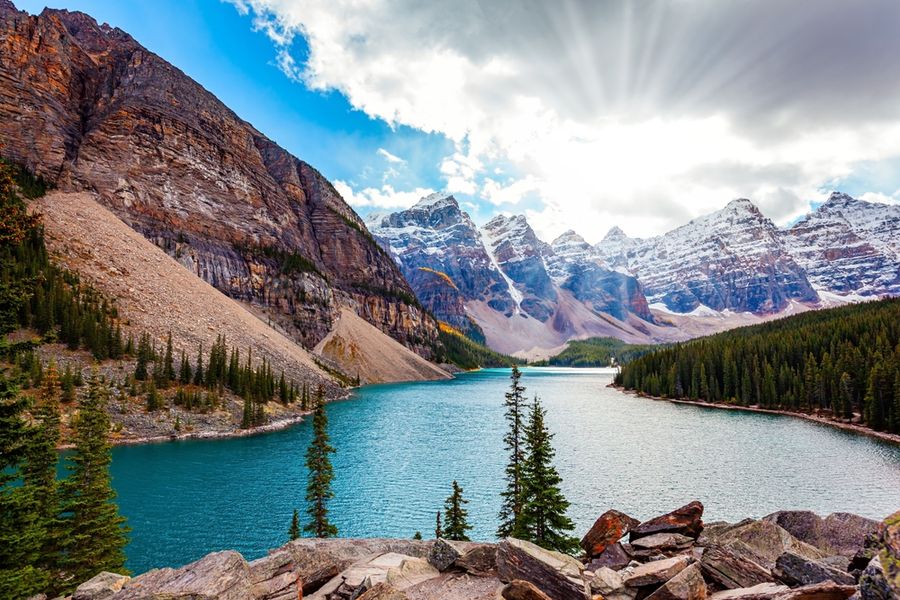
Canada's oldest national park remains its most visited, and 2025 set another record with roughly 5.5 million visitors passing through. The turquoise waters of Lake Louise and Moraine Lake, the Icefields Parkway, and the Banff Gondola up Sulphur Mountain explain the draw, but the crowds mean early starts and advance shuttle bookings for the busiest lakes are essential in peak summer months. Visitors willing to explore beyond the Bow Valley corridor, on trails like Sunshine Meadows or Helen Lake, will find far quieter alpine scenery just a short drive from the townsite.
Jasper National Park, Alberta
Jasper is the comeback story of the season. After the 2024 wildfire that destroyed a third of the townsite, Parks Canada reopened the vast majority of the park's trail network in 2026, including the Valley of the Five Lakes and the iconic Skyline Trail. Some areas, including sections around Maligne Canyon and Mount Edith Cavell, remain closed while rehabilitation continues, so checking the park's current open and closed status page before arrival is worth the few minutes it takes. Accommodation and campsite inventory in the townsite is still reduced compared to pre-fire capacity, making early booking and nearby-community lodging in Hinton or Valemount practical backups.
Pacific Rim National Park Reserve, British Columbia
On the wild west coast of Vancouver Island, Pacific Rim pairs old-growth rainforest with some of Canada's best surfing. Long Beach draws surfers year-round in wetsuits thick enough for the Pacific's chill, while the Wild Pacific Trail and the multi-day West Coast Trail reward hikers with dramatic sea-stack views. The nearby communities of Tofino and Ucluelet make comfortable bases, and storm-watching season each winter has become nearly as popular as the summer surf crowds.
Gros Morne National Park, Newfoundland and Labrador
A UNESCO World Heritage Site since 1987, Gros Morne is one of the few places on Earth where visitors can walk across exposed mantle rock and see plate tectonics laid bare. The park's landlocked fjord, Western Brook Pond, is reachable only by a boat tour after a level hike through boreal forest, and the summit of Gros Morne Mountain offers sweeping views across the Long Range Mountains to the Gulf of St. Lawrence. It is a longer trip for most Canadians, but the scenery and relative lack of crowds make it worth the flight to Deer Lake or Corner Brook.
Cape Breton Highlands National Park, Nova Scotia
Anchoring the famed Cabot Trail, Cape Breton Highlands delivers coastal cliffs, moose sightings, and some of Atlantic Canada's best fall foliage. The Skyline Trail's boardwalk loop, with its cliffside view over the Gulf of St. Lawrence, is consistently ranked among the park's top hikes. Late September into October brings the Maritimes' most vivid autumn colour, while summer months are better suited to whale watching off Pleasant Bay and freshwater swimming at Warren Lake.
Nahanni National Park Reserve, Northwest Territories
For travellers chasing true wilderness, Nahanni is in a class of its own. Accessible only by float plane or multi-day canoe expedition, the reserve protects Virginia Falls, a cascade roughly twice the height of Niagara, along with deep limestone canyons carved by the South Nahanni River. It is neither cheap nor easy to reach, but for paddlers and backcountry travellers it delivers a scale of remoteness increasingly rare anywhere in North America.
Planning Your Visit
Most of these parks require a park entry fee, and frequent visitors typically save money with a Parks Canada Discovery Pass, which covers unlimited entry to more than 80 destinations nationwide for a full year. Visitors 17 and under always enter free of charge, a policy Parks Canada has maintained to encourage youth engagement with the park system. Campsites and backcountry permits at high-demand parks like Banff, Jasper, and Pacific Rim tend to sell out months ahead, so reservations should go in as soon as booking windows open. Whichever park makes the shortlist, checking each destination's current trail and facility status before departure remains the simplest way to avoid surprises on arrival.