

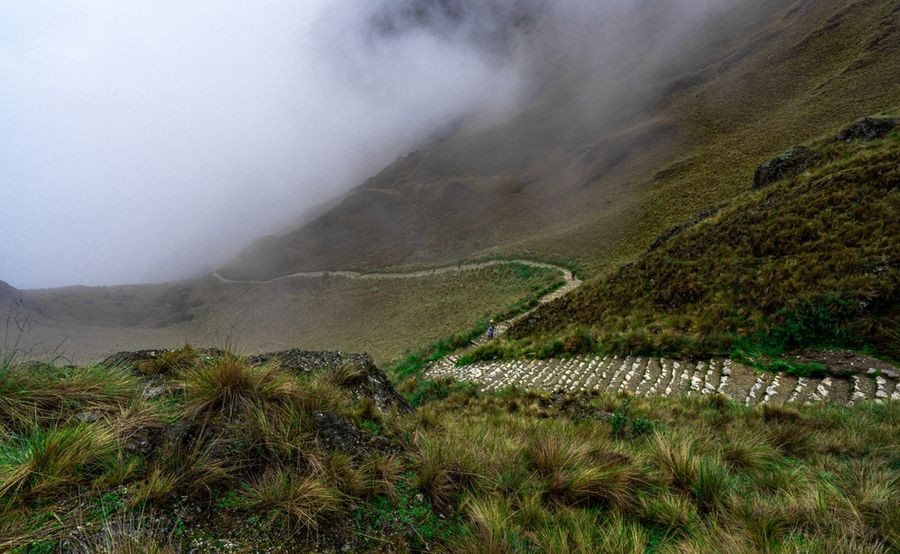
From high-altitude Himalayan valleys to volcanic Icelandic highlands, the world's best hikes reward the effort with landscapes unreachable by road. Some, like Peru's Inca Trail, require permits booked months ahead; others, like a sunrise scramble up Zion's Angels Landing, can be done in an afternoon. Whether the goal is a multi-day trek through remote wilderness or a single unforgettable day hike, seven routes across six continents top most hikers' lists.
Inca Trail, Peru
The classic four-day Inca Trail winds through cloud forest and high mountain passes before delivering hikers to Machu Picchu through the Sun Gate at dawn, a payoff few other treks can match. Peru's government caps the trail at 500 people per day, including guides and porters, which means permits sell out months in advance during the June-to-September high season, according to SAM Travel Peru and Alpaca Expeditions. Travellers set on this route should book through a licensed operator as early as possible, since independent trekking is not permitted.
Everest Base Camp Trek, Nepal
This roughly two-week round trip through the Khumbu Valley climbs to 5,364 metres, passing Sherpa villages, monasteries, and views of Everest, Lhotse, and Ama Dablam along the way. Acclimatization days are non-negotiable at this altitude, and most itineraries build in rest stops at Namche Bazaar and Dingboche to reduce the risk of altitude sickness. Flights into Lukla's short mountain airstrip are the usual starting point, and poor weather can delay them by days, so buffer time is worth building into any itinerary.
Tour du Mont Blanc, France, Italy, and Switzerland
Circling the Mont Blanc massif through three countries, this roughly 170-kilometre hut-to-hut route is considered one of the finest long-distance walks in Europe. Most hikers take 10 to 12 days to complete the full loop, staying in mountain refuges that require advance booking during the July and August peak. Shorter sections are easily accessed for day hikes from towns like Chamonix and Courmayeur for those without two weeks to spare.
Milford Track, New Zealand
Often billed as "the finest walk in the world," this four-day Great Walk through Fiordland National Park passes Sutherland Falls, one of the country's tallest waterfalls, en route to Milford Sound. New Zealand's Department of Conservation manages the track and limits independent walkers to 40 per day in the guided walking season, with hut bookings released well ahead of the summer season. Booking opens roughly a year in advance and the most popular dates go quickly.
Angels Landing, Zion National Park, USA
For a shorter but still demanding option, Angels Landing packs switchbacks, a chained scramble along a narrow sandstone spine, and sweeping views of Zion Canyon into a half-day round trip. The U.S. National Park Service now requires a permit obtained through a lottery on Recreation.gov, a pilot program introduced to manage overcrowding on the exposed final section. Day-before and seasonal lotteries both run, so last-minute visitors still have a chance at a permit.
Kilimanjaro, Tanzania
Africa's highest peak is also one of the more accessible high-altitude climbs anywhere, since no technical mountaineering skill is required, only sustained fitness and proper acclimatization. Multiple official routes, including Machame and Marangu, lead to the 5,895-metre summit at Uhuru Peak, each with different scenery and success rates, as detailed by Mount Kilimanjaro National Park. Climbs typically run five to nine days, and longer itineraries generally have meaningfully higher summit success rates due to better acclimatization.
Laugavegur Trail, Iceland
This roughly 55-kilometre trail across Iceland's southern highlands crosses steaming geothermal fields, black lava deserts, and rhyolite mountains in shades of red and gold between Landmannalaugar and Þórsmörk. Ferðafélag Íslands, the Icelandic touring association that maintains the trail's huts, recommends three to four days for the full route, with an optional extension to Skógar. The hiking season is short, generally late June through early September, since snow and unbridged glacial rivers make the route unsafe outside those months.
Planning Considerations
Nearly every hike on this list requires some form of advance planning, whether that means a permit lottery, a hut reservation, or booking through a licensed guide. Altitude, weather windows, and seasonal access all narrow the realistic window for attempting many of these routes, so checking official park or tourism-board sites before locking in travel dates is worth the extra step. Physical preparation matters too: multi-day treks above 3,000 metres benefit from weeks of cardio training beforehand, and even shorter, exposed routes like Angels Landing are safer with proper footwear and an early start to avoid crowds and afternoon heat.